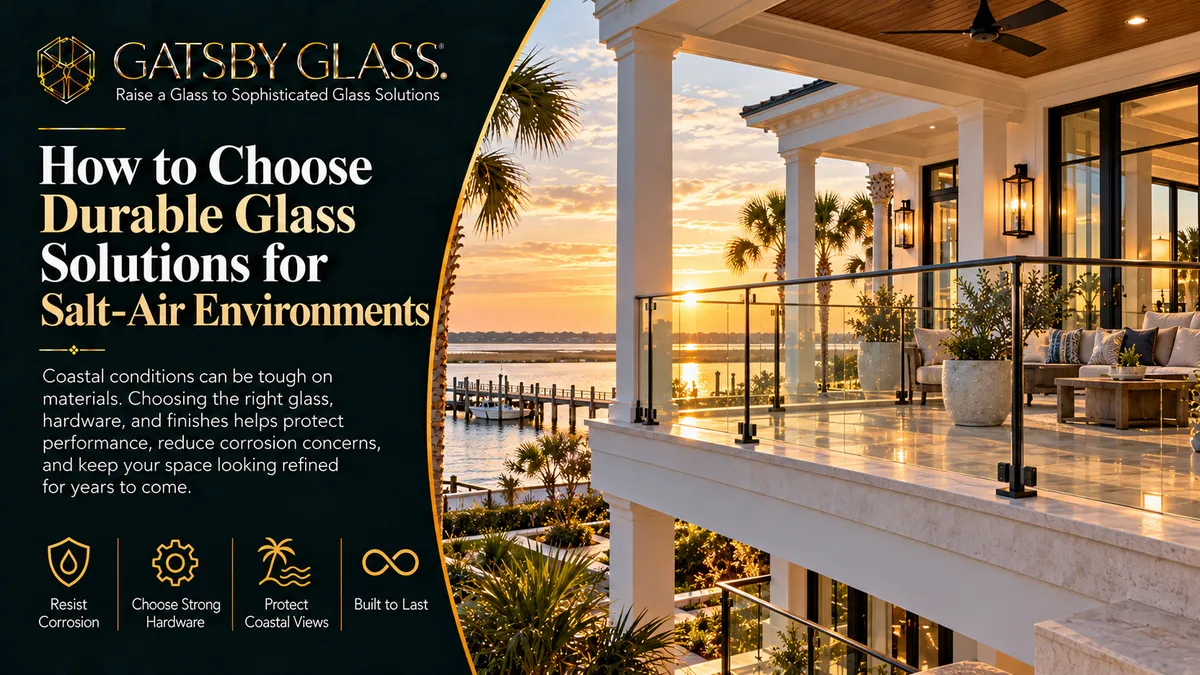
How to Choose Durable Glass Solutions for Salt-Air Environments in Charleston
Learn how to choose durable glass for Charleston's salt-air climate, from corrosion-resistant hardware and safety glass to easier upkeep for homes and businesses.
Living near the Charleston coast has its advantages. The ocean breeze, natural light, and beautiful waterfront views are part of what makes the Lowcountry special. But that same coastal environment can be surprisingly tough on the materials used in homes and commercial spaces.
You might notice small rust-colored spots around a shower hinge, cloudy residue on a balcony railing, or an outdoor glass fixture that seems to need constant cleaning. These problems are often less about the glass itself and more about the hardware, finishes, and installation details surrounding it.
Choosing durable glass solutions for salt-air environments means thinking beyond appearance. The right materials and thoughtful installation can help maintain the clean, open look of glass while making everyday maintenance more manageable.
Why Charleston's Coastal Climate Changes the Way Glass Should Be Chosen
Salt air doesn't affect every property equally. A beachfront home on Isle of Palms experiences different conditions from a downtown Charleston office or a house farther inland in Summerville.
When airborne salt settles on exposed surfaces, it can combine with moisture and contribute to corrosion. Metal hinges, fasteners, railing brackets, and framing components can be especially vulnerable. Persistent humidity can also make moisture control important around mirrors, shower enclosures, and seals.
Over time, these issues may lead to staining, deteriorating finishes, or hardware that no longer operates as smoothly as it should.
That is why a glass installation that performs well in a protected interior may need different materials or maintenance considerations when installed on an ocean-facing balcony.
Start With the Location, Not Just the Glass Design
Before choosing glass thickness, hardware finishes, or framing styles, consider exactly where the installation will be used.
A few practical questions can make the selection process easier:
Is the glass indoors or outdoors? Exterior installations face more direct weather exposure.
How close is the property to saltwater? Oceanfront locations may require greater corrosion resistance.
Will water collect around the hardware? Poor drainage can accelerate deterioration.
How frequently will the space be used? Rental properties, busy bathrooms, and commercial entrances need hardware suited to repeated operation.
How accessible is the glass for cleaning? Difficult-to-reach panels may require more maintenance planning.
These details influence the entire installation, including the mounting system and finishes.
For Charleston's historic homes, the property's architecture matters too. Exterior alterations in designated historic districts may require review, so modern glass features should be planned with the building's character and applicable local requirements in mind.
Choose Hardware That Can Handle Salt and Humidity
One of the most important decisions in a coastal glass project is often the least noticeable: the metal hardware.
Salt exposure can affect the brackets, hinges, handles, and fasteners that hold glass systems together. Choosing a beautiful finish without considering what is underneath it can lead to disappointing results.
Marine-grade stainless steel: Type 316 stainless steel generally offers better resistance to chloride-related corrosion than Type 304, making it a useful option to discuss for exposed coastal installations. Even marine-grade hardware needs maintenance, especially near direct salt spray.
Protective finishes: Certain architectural aluminum systems and coated hardware can perform well when their finishes are specifically rated for the intended coastal environment.
Proper drainage and installation: Water should not be allowed to collect unnecessarily around mounting points, joints, or exposed edges.
The goal isn't simply to choose the most expensive hardware. It's to select components suited to the property's exposure, appearance, and expected use.
Match the Glass Type to Its Purpose
Not every glass application requires the same material.
Tempered safety glass is commonly used for shower doors and other suitable applications because of its strength and safer breakage characteristics. Glass railings may require laminated safety glass and engineered mounting systems, depending on the location, design, and applicable building codes.
For projects where visual clarity matters, low-iron glass can reduce the green tint sometimes visible in standard clear glass. This can be particularly appealing when framing a marsh view or showcasing light-colored tile.
However, low-iron glass is a clarity choice, not a substitute for the correct structural or safety specification.
Coastal properties also need to account for wind exposure and, where applicable, storm-related glazing requirements. Final glass selection should always reflect the actual installation conditions.
Frameless Shower Enclosures: Simple Design, Practical Maintenance
Imagine renovating a compact bathroom in a Folly Beach home. The tile is beautiful, but an older framed enclosure makes the room feel crowded. Its tracks also collect soap residue and moisture in areas that are frustrating to clean.
Modern frameless shower doors can create a more open feeling while reducing the amount of visible framing.
With fewer tracks and exposed profiles, many frameless designs also make routine surface cleaning more accessible. Proper door alignment, water control, ventilation, and suitable hinges remain essential.
For homeowners concerned about water spots, an appropriate protective glass coating may make cleaning easier. It won't eliminate maintenance, but it can help reduce residue buildup when paired with regular care.
Glass Railings: Preserve the View Without Overlooking Durability
A waterfront deck should allow you to enjoy the view, not feel surrounded by heavy barriers.
That's one reason glass railings are appealing for Charleston balconies, outdoor staircases, and elevated decks.
They maintain open sightlines toward the water, marsh, or landscape while providing a protective barrier when properly designed and installed.
For a home overlooking the water on James Island, the most important decisions extend beyond how transparent the panels appear. The support structure, glass type, wind loads, drainage, and corrosion-resistant mounting hardware all deserve attention.
Exterior railing systems must satisfy applicable safety and structural requirements. A professionally planned installation balances visual openness with those essential protections.
Custom Mirrors: Consider Moisture Behind the Glass
Mirrors can transform an interior without changing its layout. A large vanity mirror can reflect daylight across a narrow bathroom, while a carefully positioned wall mirror can make a living area feel more spacious.
When choosing custom mirrors in Charleston, it's worth thinking about the conditions behind the reflective surface as well.
Excess moisture around mirror edges or backing materials can contribute to deterioration over time.
In humid bathrooms, properly selected mirror materials, compatible installation products, adequate ventilation, and careful positioning are important.
For older Charleston homes with uneven walls or unusual dimensions, custom measurements can also help create a cleaner fit around existing cabinetry, lighting, and architectural details.
Glass Walls and Partitions: Bring Light Into Working Spaces
Coastal durability isn't only an outdoor concern. Interior spaces benefit from materials and layouts that accommodate humidity, everyday use, and easy cleaning.
For example, an office in Mount Pleasant may need a separate meeting room without sacrificing the daylight that makes the workspace inviting.
Well-planned glass walls and partitions can define private areas while keeping the overall office visually connected.
Office glass solutions may include clear, frosted, or partially obscured panels, depending on privacy needs.
For architects and business owners, the important details include mounting conditions, door operation, privacy, acoustics, and compatibility with surrounding finishes.
Storefront Glass: Durability Matters for Business Operations
Commercial glass serves a different purpose from decorative interior glass. Storefronts and entry doors must support visibility, frequent use, safe access, and the overall appearance of a business.
Consider a retail shop on King Street. Large glass panels can create a welcoming storefront, but doors, framing, seals, and hardware must also hold up to everyday traffic.
When planning commercial and storefront glass, business owners should consider exposure, safety glazing, accessibility requirements, and whether existing framing can be reused.
A thoughtful design can improve natural light and the customer experience without overlooking practical maintenance needs.
Keeping Coastal Glass Looking Its Best
Even durable glass installations need occasional attention. Salt deposits, minerals, and everyday residue can accumulate regardless of how carefully a system was designed.
Fortunately, basic maintenance can make a meaningful difference.
For exterior glass, remove salt deposits regularly using manufacturer-approved cleaning methods and fresh water where appropriate. Use soft, nonabrasive cleaning materials to avoid scratching the surface.
For shower enclosures, a squeegee after use helps reduce visible water spotting. Hinges and handles should be cleaned according to their finish manufacturer's instructions, avoiding harsh chemicals that could damage protective surfaces.
Mirrors benefit from good ventilation and careful cleaning that prevents excess liquid from collecting along exposed edges.
The best maintenance routine is the one that suits the specific materials and is simple enough to follow consistently.
The Best Coastal Glass Is Designed Around the Entire Space
A durable installation is rarely about one feature alone.
The glass may be beautiful, but the long-term result also depends on its frame, hardware, mounting points, surrounding surfaces, and how the space is used.
That's why custom glass installations benefit from careful measurement and material selection before fabrication.
At Gatsby Glass of Charleston, the design process considers the opening, glass type, hardware finishes, and individual project conditions rather than treating every installation as identical.
For homeowners, contractors, and business owners, discussing salt-air exposure early can help avoid unsuitable material choices later.
A Clearer Approach to Coastal Living
Charleston's coastal environment doesn't mean homeowners and businesses have to compromise on modern glass design. It simply makes thoughtful material selection more important.
From frameless showers and custom mirrors to waterfront railings and office partitions, the most successful projects balance appearance, safety, durability, and realistic maintenance expectations.
Before making your final choice, consider where the glass will be installed, how much exposure it will receive, and which details will matter most after years of everyday use.
If you're planning a glass upgrade for your Charleston home or business, a consultation with a local glass specialist can help you compare options and find a solution that feels right for your space.